Chapter 1
Notes + Exercise LinkSociety and Culture of Pakistan
Explore the rich elements of culture, linguistic diversity, cuisine, regional folklore, and the social dynamics of Pakistani society including mystical Sufi orders.
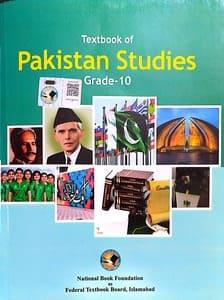
Boost your board exam prep with chapter-wise, SLO-based Class 10 Pakistan Studies notes. Formulated specifically for the Federal Board English Medium syllabus, these notes contain fully solved textbook exercises, conceptual MCQs, short answers, detailed long questions, and exam revision guides matching the latest NBF textbook.
The Class 10 Pakistan Studies Notes FBISE page offers comprehensive chapter-wise learning resources for Federal Board SSC-II students following the National Book Foundation (NBF) textbook. Designed to support SLO-based assessment, this guide includes resolved textbook exercises, conceptual MCQs, definitions, short questions, and long-answer solutions. Students can read the detailed notes online or download the PDF format for offline study and board exam revision.
Select a chapter below to access online solved exercises, conceptual questions, MCQs, and offline PDF download options.
Explore the rich elements of culture, linguistic diversity, cuisine, regional folklore, and the social dynamics of Pakistani society including mystical Sufi orders.
Understand the developmental and psychological significance of sports, leisure activities in urban and rural Pakistan, traditional games, and national and international sports achievements.
Trace the constitutional history of Pakistan, the Objectives Resolution, constitutional assemblies, and analyze key Islamic and democratic provisions of the 1956, 1962, and 1973 constitutions.
Examine the rule of law, citizenship rights and responsibilities, taxation, community service, parliamentary checks and balances, digital citizenship, and the role of free media.
Study the determinants, guiding principles, and objectives of Pakistan's foreign relations, geopolitical importance, and bilateral ties with regional neighbors and global powers.
Analyze Pakistan's contributions to the United Nations, peacekeeping missions, and regional organizations like SAARC, OIC, and ECO, alongside challenges in resolving global issues.
Pakistan Studies is a critical subject in the Matric (SSC-II) curriculum, providing students with a deep understanding of the country's cultural diversity, constitutional framework, civic duties, and international relations. In alignment with the latest Federal Board (FBISE) Student Learning Outcomes (SLO) guidelines, this page delivers high-quality solved notes for all six chapters. The sequences and topics strictly match the National Book Foundation (NBF) textbook, ensuring a reliable alignment with standard school examinations.
The curriculum is divided into three key sections. Section 1 covers Cultural Diversity and Recreation, highlighting Pakistani society, folklore, arts, and the developmental impact of sports. Section 2 delves into the legal framework, detailing Constitutional Development from 1947 to 1973 and discussing the tenets of Digital Citizenship and Sustainable Society. Section 3 outlines Pakistan's global footprint, focusing on Foreign Policy determinants and Pakistan's active role in international organizations like the UN, OIC, and SAARC.
By utilizing these solved notes, students can shift from simple memorization to a conceptual understanding of the social sciences. The content highlights important terminology, structured comparisons (such as constitutional differences), and extractable short answers designed to help both high achievers aiming for top scores and students needing simple summaries to pass.
These study resources serve as a comprehensive helper guide for FBISE Class 10 students. Built upon the National Curriculum framework, the notes address both theoretical knowledge and practical comprehension questions. Whether you are learning a topic for the first time or doing a quick revision before the final board exam, these documents compile everything in a structured, readable format.
Each chapter file has been processed to highlight core points, historical dates, and legal clauses, ensuring that when students answer questions in the board exams, they include the essential keywords that examiners look for. Rather than going through heavy reference guides, students can rely on this unified textbook solution.
Specifically, these notes cover the following critical areas: Solved textbook exercises, conceptual MCQs, important historical timelines, comparative constitution tables, foreign policy eras, international treaties, and digital citizenship rules. By reading through these compiled sections, you will get access to:
Students can use the chapter-wise material to access the following learning resources:
Complete, accurate answers to all textbook review questions, fill-in-the-blanks, and match-the-column exercises.
Conceptual and fact-based multiple-choice questions with correct keys to score full marks in the objective section.
To-the-point, extractable short-answer questions covering key terms, historical events, and definitions.
Detailed, well-structured long answers with headings and bullet points for high-scoring presentation in exams.
Clear definitions of socio-political terms like culture, rule of law, citizenship, foreign policy, and digital footprint.
Comparative matrices of constitutions, tables of historical eras, and diagrams representing parliamentary balances.
Application-based and analytical questions reflecting the latest FBISE assessment shift towards student outcomes.
Offline access to print-ready solved notes files for each chapter, allowing you to study anytime without internet.
These Class 10 Pakistan Studies notes are fully aligned with the Single National Curriculum (SNC) guidelines and the Student Learning Outcomes (SLO) framework set by the Federal Ministry of Education. The material is structured based on the National Book Foundation (NBF) textbook prescribed for Federal Board (FBISE) schools. The SLO framework shifts the focus from rote learning to critical analysis, asking students to compare constitutions, analyze foreign policy epochs, and evaluate citizenship traits. These notes are designed to meet these analytical parameters, helping students develop critical socio-political insights while preparing for their examinations.
To maximize your marks in the FBISE board exams, we recommend a structured preparation methodology:
Always start by reading the official NBF textbook chapter. This sets the background and gives you a basic understanding of the historical and social themes.
Use the notes to highlight and memorize critical historical timelines, names of key personalities, constitution dates, and international treaty agreements.
Practice the MCQs section for each chapter. FBISE exams place a high weight on objective questions, which require accurate factual and conceptual knowledge.
Study the short answers. Focus on how definitions and key concepts are explained within 3-4 lines for quick extraction and high marks.
Review the long answers. Pay attention to how points are structured with sub-headings, bullet lists, and introduction/conclusion blocks.
Draw or study the constitutional comparison tables and maps. Adding visual comparisons to your exam sheet dramatically improves presentation quality.
Run through the quick answer block and chapter summaries on this page before class tests or final board examinations to keep the information fresh.
Check out these helpful links to complete your exam prep for Pakistan Studies and other Matric subjects:
These are chapter-wise study notes for Federal Board (FBISE) Class 10 students following the English Medium NBF textbook. They cover solved textbook exercises, MCQs, short questions, and long questions.
Yes, they are compiled according to the National Book Foundation (NBF) textbook and curriculum updates for the 2026-2027 academic session.
Absolutely. The notes focus on critical thinking, conceptual understanding, and comparisons of constitutions, foreign policies, and citizenship responsibilities to match FBISE's SLO guidelines.
Yes, PDF download options are available on the respective chapter notes pages, allowing offline reading and revision.
There are six chapters: 1) Society and Culture, 2) Recreation - Sports, 3) Constitutional Development, 4) Citizenship and Sustainable Society, 5) Foreign Policy, and 6) Pakistan and International Organizations.
Yes, all textbook MCQs as well as additional SLO-based conceptual multiple-choice questions are fully solved and explained.
Yes, Class 10 represents SSC-II (Matric Part 2). These notes are tailored specifically to meet Federal Board SSC-II examination requirements.
Yes, the full chapter notes, questions, and answers can be read online through the StudyPlusPlus website on any device.
Yes, Chapter 3 notes contain a comparative analysis of the 1956, 1962, and 1973 Constitutions of Pakistan, highlighting Islamic and democratic provisions.
Chapter 4 covers digital citizenship, traits of a responsible citizen, taxation significance, and parliamentary checks and balances, giving students a thorough understanding of modern civic responsibilities.
Yes, Chapter 5 details the historical eras of Pakistan's foreign policy, starting from the era of neutrality up to the post-9/11 realignment and modern times.
While these notes follow the NBF textbook for the Federal Board (FBISE), Punjab Board students can use them to study shared topics such as foreign relations, constitutions, and cultural diversity.
Chapter 1 highlights the mystical orders of Pakistan (Qadiri, Chishti, Naqshbandi, Suhrawardy) and evaluates their influence on Pakistani society and cultural diversity.
No, all Class 10 Pakistan Studies notes, study guides, and exercises on StudyPlusPlus are entirely free for students and teachers.