Chapter 1
Notes + Exercise LinkIdeological Basis of Pakistan
Detailed study of the Ideology of Pakistan, two-nation theory, Aligarh Movement, and the early administrative, financial, and political problems faced by the newly born state in 1947.
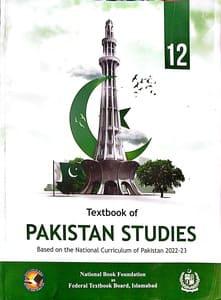
Boost your exam prep with chapter-wise SLO-based solved exercises, MCQs, short answers, and long questions.
Our solved Class 12 Pakistan Studies notes for Federal Board (FBISE) are based on the latest National Book Foundation (NBF) textbook. This complete guide contains chapter-wise SLO-based solved exercises, conceptual MCQs, high-scoring short questions, and detailed long questions for the 2026-2027 academic session.
Select any chapter to read online or download the PDF notes for exam preparation.
Detailed study of the Ideology of Pakistan, two-nation theory, Aligarh Movement, and the early administrative, financial, and political problems faced by the newly born state in 1947.
Covers the political history of Pakistan including the Quaid-e-Azam's era, constitution-making struggles, and major political regimes like Ayub Khan, Yahya Khan, Bhutto, Zia, Musharraf, and democratic governments up to 2025.
Explores Pakistan's geography, neighboring countries, administrative divisions, geopolitical importance, and major environmental hazards such as global warming and water pollution.
Detailed analysis of forest types in Pakistan, factors affecting vegetation, the economic importance of mangroves, deforestation consequences, and the impacts of climate and vegetation on regional lifestyles.
Investigates Pakistan's metallic and non-metallic minerals, mining potential, energy resources (nuclear, solar, wind), and modern telecommunication developments, including the role of AI.
Covers major industrial sectors (cement, sugar, cotton), cottage industries, challenges of unemployment, the economic significance of animal husbandry, Gwadar port, and sustainable farming practices.
Explores individual roles in society, constraints of national integration, appreciation of diversity (ethnic, religious, linguistic), the concept of a welfare state, and challenges like sectarian divisions and economic inequality.
Analyzes tourism as an industry, famous historical, religious, and commercial destinations in Pakistan, economic benefits like employment and revenue generation, and sustainable tourism policies.
Outlines Pakistan's constitutional journey, Objective Resolution (1949), and key features of 1956, 1962, and 1973 constitutions, along with the comparison of UN human rights with the 1973 constitution.
Discusses duties of a good citizen, women and child rights, status of human rights in health and education, role of education in poverty alleviation, animal rights, and case studies of role models.
Detailed analysis of Pakistan's foreign relations with USA, China (including CPEC), UK, Russia, Central Asian states, EU, SAARC, Afghanistan, India, and OIC countries under the framework of SDGs.
Examines the role of the UN in global conflicts, Pakistan's contribution to international peacekeeping, relations with regional bodies like ECO, EU, SCO, BRICS, and the socio-economic impact of IMF programs.
Preparing for the Federal Board HSSC-II annual exams requires a comprehensive grasp of Pakistan's history, geography, foreign relations, and socio-economic systems. Our updated Class 12 Pakistan Studies notes provide structured answers and analytical outlines that directly follow the SLO-based guidelines issued by FBISE. Written in clear English medium, these resources help students secure high marks by targeting precisely what examiners look for.
The syllabus covers critical subjects ranging from the ideological foundations of Pakistan and initial challenges in 1947 to contemporary political developments and foreign policies. Each chapter has been simplified using bulleted lists, definitions of key terms, and summaries. This ensures that students can quickly revise complex topics, such as constitutional amendments or regional security issues, without feeling overwhelmed by heavy textbook paragraphs.
By using these solved notes, students can save time on revision and focus on solving past papers and model questions. The notes contain solved textbook exercises, including all multiple-choice questions (MCQs), short-answer conceptual questions, and long-answer descriptive questions, making it a complete companion for Federal Board preparation.
These study materials serve as a comprehensive exam guide for Federal Board 2nd year students. They are designed to act as a supplement to the official National Book Foundation (NBF) textbook, bridging the gap between broad theory and high-scoring exam presentation.
Whether you are looking to master the key themes of foreign policy, understand the administrative divisions of Pakistan, or memorize the constitutional milestones, these structured summaries make revision highly effective.
Here is a breakdown of what these Pakistan Studies notes cover for HSSC-II students:
Students can use the chapter-wise material to access the following learning resources:
Complete solutions to textbook questions, ensuring accuracy for board exams.
Conceptual and text-based multiple-choice questions for the objective portion.
High-yield, direct answers targeting specific Student Learning Outcomes.
Detailed, structured answers with headings and bullet points for maximum marks.
Clear explanations of geographical, historical, and constitutional terms.
Geographical illustrations, administrative boundaries, and neighboring regions maps.
Analytical and critical-thinking questions to tackle modern board patterns.
Easy-to-access offline versions of notes for flexible study schedules.
These Class 12 Pakistan Studies solved notes are strictly aligned with the Single National Curriculum (SNC) and Federal Board's Student Learning Outcome (SLO) pattern. FBISE shifted to conceptual testing to discourage rote learning, and these notes reflect that change by presenting conceptual answers, comparative analysis, and critical-thinking questions that align with the national educational framework.
Follow this simple preparation method to get better results in Pakistan Studies.
Go through the NBF textbook chapter once to get a basic understanding of the history or geographical concepts.
Read the corresponding chapter notes on StudyPlusPlus to summarize key dates, figures, and concepts.
Practice the objective portion first to build confidence and secure a perfect score on the mandatory MCQs section.
Memorize short answers using our bulleted lists to ensure you answer concisely and hit all key points.
Study the outline of long answers, focusing on the headings and sub-headings to structure your responses during exams.
Draw administrative and geographical maps where required to visually enhance your answers.
Use the notes' summaries for a quick revision session the night before tests or the final board exam.
Use these resources to complete your Pakistan Studies preparation and other subjects.
These are comprehensive, chapter-wise solved notes for Federal Board HSSC-II students. They support the latest National Book Foundation (NBF) syllabus and include MCQs, short questions, and structured long questions.
Yes, these notes are aligned with the HSSC-II Pakistan Studies curriculum updated for the 2026-2027 academic session. They follow the NBF textbook and SLO-based exam guidelines.
Yes, they are designed to support Student Learning Outcomes (SLO) testing, focusing on conceptual understanding, analytical thinking, and historical analysis rather than rote learning.
Yes, the sequence of the 12 chapters, definitions, and questions are modeled according to the National Book Foundation Pakistan Studies textbook prescribed for FBISE.
Yes, solved exercise questions from the textbook are provided for each chapter to assist students in preparing exact answers.
Yes, chapter-wise objective questions with answers are provided to help students prepare for the 20% MCQ section of the board paper.
Yes, PDF download links are available on individual chapter pages for easy offline study.
Absolutely. They cover the entire board syllabus and help students write well-structured, high-scoring answers in their intermediate board examinations.
Yes, the simplified language, clean headings, and bullet points make it easier for students to retain historical dates and facts.
Yes, they are fully aligned with the Single National Curriculum (SNC) and the National Curriculum guidelines.
Yes, the complete chapter-wise notes can be read online for free on StudyPlusPlus using any device.
Yes, key maps, administrative boundaries, and neighboring countries' locations are highlighted where relevant to help with visual learning.
While these notes are highly comprehensive for learning and revision, students are advised to read the textbook and practice FBISE past papers for maximum preparation.
Punjab Board students can use them for shared topics (like history and foreign relations), but they should keep their own PCTB textbook as the primary reference.
Yes, Pakistan Studies is a compulsory subject for all intermediate groups, including pre-engineering, pre-medical, ICS, and humanities.